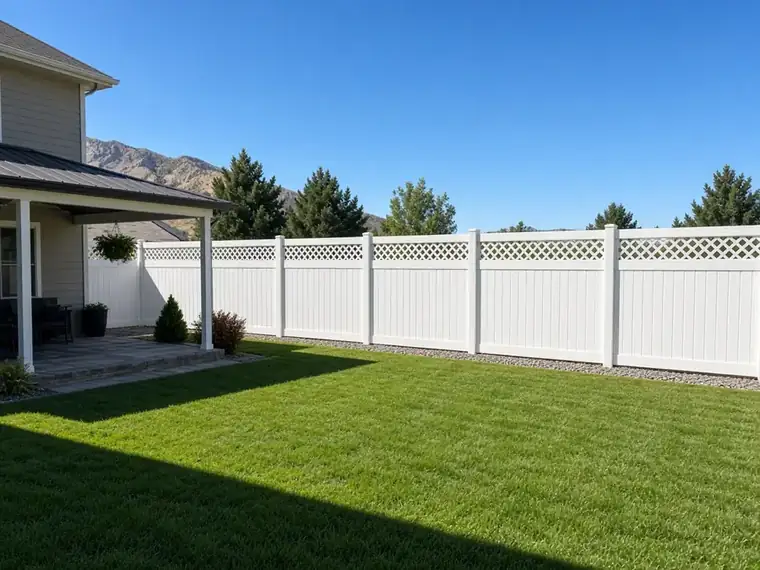
Where vinyl is limited
- Denver historic districts and landmarks: Landmark Preservation says vinyl, PVC and chain-link fences are not allowed in most historic districts and on individual landmarks (Denver Landmark Preservation).
- Aurora front yards: Aurora's residential fence brochure lists chain link and vinyl as prohibited materials in its front-yard section, where fences are also capped at 42 inches and must be no more than 50% opaque (Aurora brochure).
- HOAs: Many subdivisions specify fence material and color. Get written approval first; see the HOA guide.
Behind the house in most of Denver and the suburbs, vinyl privacy fencing is treated like any other fence for height and permits.
How vinyl handles Front Range weather
- Sun: Quality vinyl is UV-stabilized. Ask for the manufacturer's written warranty and whether it covers fading and yellowing.
- Cold and hail: Vinyl gets stiffer in the cold. A hard impact on a frigid day can crack a panel that would flex in summer. Ask how easily single panels or pickets can be replaced, and whether the color is likely to stay available.
- Wind: Solid vinyl privacy panels catch wind like solid wood. Ask whether posts are reinforced (for example with metal inserts or concrete) at gates, corners and exposed runs.
- Clay soil: Post setting matters as much as with wood. Swelling clay can lift footings (CGS).
Height and permits
Denver allows 4 feet in front of the primary façade and 6 feet behind it, with a zoning permit for anything over 4 feet (Denver CPD). Aurora exempts fences up to 7 feet from building permits (Aurora City Code 22-135), while Arvada and Littleton permit every fence. Check your city on the service areas page.
What drives the price
Vinyl quotes depend on panel style (privacy, semi-privacy, picket), height, linear footage, gates and gate hardware, reinforcement, removal of the old fence, slope and permits. Ask whether panels are racked or stepped on slopes; that changes both the look and the cost.
Questions to ask a vinyl fence contractor
- Which manufacturer and product line, and what does its warranty cover?
- Are gate posts reinforced, and how are gates hung?
- Can single panels be replaced after hail, and how long has this color been in production?
- Who handles the permit, HOA submittal and Colorado 811 ticket?
Frequently asked questions
Is vinyl fencing allowed in Denver?
Yes in most residential areas, within the 4-foot front and 6-foot rear limits. It is not allowed in most Denver historic districts or on individual landmarks, per Landmark Preservation. HOAs may have their own material rules.
Can I put a vinyl fence in my front yard in Aurora?
Aurora's residential fence brochure lists chain link and vinyl as prohibited materials in its front-yard section. Front fences there are also capped at 42 inches and must be no more than 50% opaque. Confirm with Aurora Planning before ordering.
Does vinyl crack in Denver winters?
Vinyl becomes less flexible in the cold, so a hard impact, such as hail or a thrown object, is more likely to crack it on a frigid day. Choose a product line with available replacement panels and a clear warranty.
Is vinyl better than cedar in Denver?
Vinyl skips the sealing that cedar needs in dry, sunny air, but it's restricted in some locations and harder to patch with an exact match. Cedar is easier to repair board by board. See our cedar page.
How high can a vinyl privacy fence be?
In Denver, 6 feet behind the primary façade. Centennial's code table allows up to 8 feet in side and rear yards, while Littleton requires a variance above 6 feet. Rules vary by city, so check the service areas.
Do vinyl fences need a permit in Denver?
Any fence over 4 feet in Denver needs a zoning permit, regardless of material. Post-hole-dug fences need a building permit only above 8 feet. In historic districts and along parkways, all fences need a permit.
How should a vinyl fence handle wind?
Ask for reinforced gate and end posts, correct post spacing for solid panels, and setting depth suited to clay soil. Semi-privacy styles with gaps reduce wind load if full privacy isn't required.