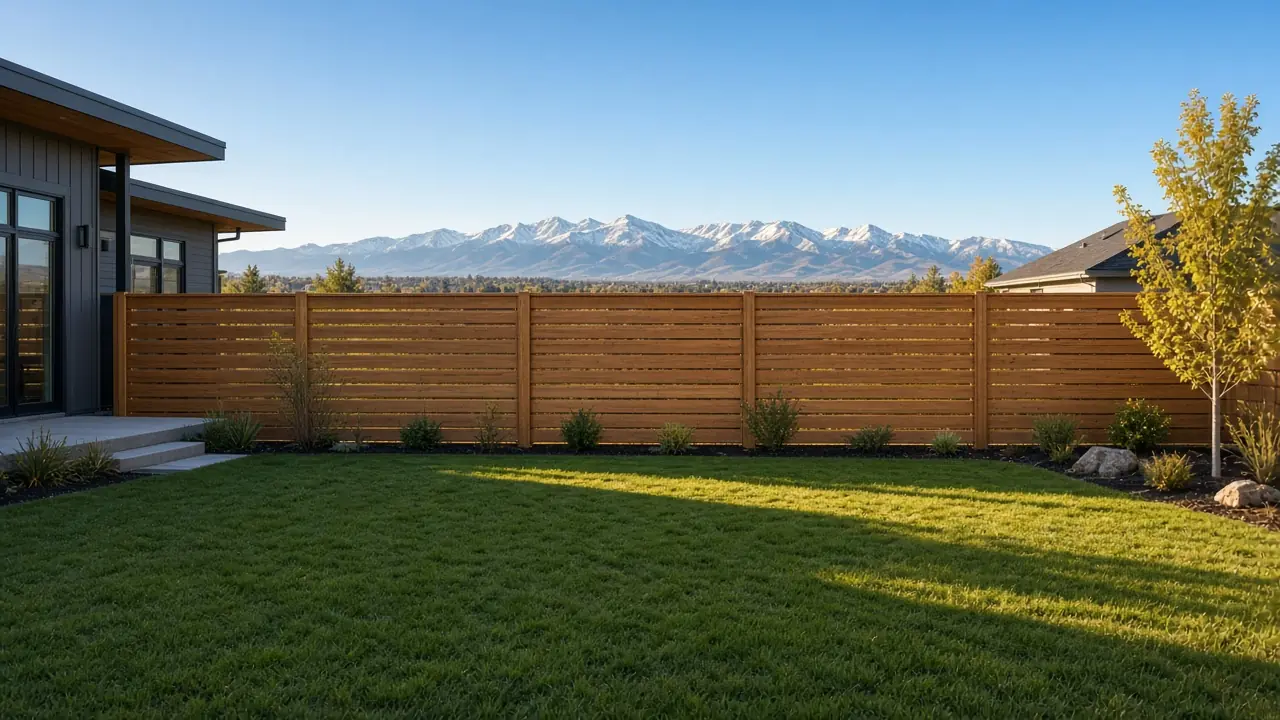
Planning a fence in Denver starts with three numbers: what the job should realistically cost ($2,780 on average across Denver, or $12 to $60 per linear foot installed in 2026 per Angi Denver), how tall the city lets you build (4 feet in front of your house, 6 feet behind it outside industrial zones), and whether your lot triggers a zoning permit, Landmark review, or HOA approval. Most homeowners run into trouble not because a fence looks simple, but because Front Range bentonite clay, 115-to-140 mph wind design gusts, and sharp rule changes across metro city lines turn identical-looking quotes into very different fences.
Key takeaways before you request a quote
- Typical 2026 Denver pricing: Installed residential fences average $2,780 ($455 to $10,500 overall, or $12 to $60 per linear foot; privacy fences average $4,549), per Angi Denver.
- Denver height & setback rule: Residential zones allow up to 4 feet forward of the primary street-facing façade and 6 feet behind it, set at least 6 inches back from the public sidewalk and never in the tree lawn or alley right-of-way (full Denver guide).
- Permits & Class D licensing: Any Denver fence over 4 feet needs a zoning permit; post-hole-dug fences only need a building permit above 8 feet. Work inside Denver requires a licensed contractor with an on-site Class D Fence Structures Supervisor Certificate holder (Denver CPD).
- Historic districts & parkways: Landmark properties and designated parkways require a permit at any height and prohibit vinyl, PVC, and chain link in most districts (Landmark rules).
- Soil, frost & 811 locates: The 2025 Denver Residential Code sets a 36-inch frost line for structural footings, and Colorado bentonite clays can swell up to 20% when wet. Always file a Colorado 811 locate at least two full business days before digging.
7 signs your Denver property needs a new fence or post rebuild
Before deciding on a full tear-out versus a targeted repair, walk your yard line and look at how posts, rails, and gates have reacted to Colorado soil movement and windstorms:
- Multiple posts leaning more than a few degrees: Once several posts along the same run tilt, expansive clay frost heave or soil-line wood rot has usually compromised the footings. Resetting isolated posts works when the rest of the line is plumb; widespread leaning favors replacement (repair vs. replacement guide).
- Rotting or soft wood within 4 inches of the ground: Sprinkler overspray, snowdrifts against the bottom rail, and buried dirt against untreated pickets rot posts from the outside in. Probing near grade with a screwdriver shows whether decay is surface-level or structural.
- Sagging gates that scrape or won't latch seasonally: Clay swelling in spring and shrinkage in late summer shift gate posts out of square. If hinge adjustments no longer hold, the latch and hinge posts usually need deeper concrete footings—or an internal steel post frame.
- Split, cupped, or UV-checked cedar boards along south- and west-facing runs: Mile-high UV radiation dries boards faster than lower-elevation markets. Individual cracked pickets are easy to swap on wood fences; brittle, hail-cracked vinyl panels are harder to color-match years later.
- Wind-loosed panels or failing rail brackets: Front Range Chinook gusts turn solid 6-foot privacy runs into sails. Nails pulling out of soft rails or bent thin-wall posts signal under-built framing rather than a cosmetic fix.
- Encroachment onto a sidewalk, alley, or neighbor's line: Many older fences predate modern enforcement. Denver requires fences to sit completely inside your property line and at least 6 inches back from the public sidewalk. A full replacement is the clean moment to fix placement with a survey.
- Insurance, HOA, or pool-barrier compliance notices: Hail-damaged runs with open gaps, outdated materials in a Landmark district, or backyard pools and hot tubs (which require code-compliant self-closing barriers in jurisdictions like Littleton and Broomfield) often require full section upgrades.
Why Denver housing stock & lot types shape fence quotes
Not every Denver yard prices the same per linear foot. According to Angi Denver, the average Denver single-family lot is roughly 0.131 acres (about 5,700 square feet)—meaning backyard privacy runs typically land around 120 to 180 linear feet rather than sprawling quarter-acre perimeters. Yet older urban neighborhoods and newer suburbs create very different installation conditions:
- Pre-1945 central brick neighborhoods: Denver's historic residential core has concentrated pre-war housing—City planning assessments show roughly 76% of homes in Platt Park built before 1940 and 79% in South Park Hill built before 1945 (Platt Park Assessment; East Area Briefing). Narrow side yards, shared alley lines, mature tree roots, and raised "Denver roll" front lawns make hand-digging and Landmark material rules common in Washington Park, Baker, Congress Park, Curtis Park, and Park Hill.
- Post-war 1950s–1970s ranches & split-levels: Inner-ring suburbs such as Lakewood (incorporated 1969), Arvada, Englewood, and older Aurora neighborhoods (the Denver metro median home year built is roughly 1978 per U.S. Census American Housing Survey data) often have aging chain-link or weathered cedar fences set in shallow concrete that requires demolition ($10–$17/ft for heavy concrete/root removal per Angi Denver) before new posts go in.
- 1980s–2020s HOA & master-planned subdivisions: Highlands Ranch, Centennial, Broomfield PUDs, and southeast Aurora feature wider lots, corner visibility triangles, metro-district perimeter fences along arterials, and strict architectural committees that dictate exact wood species, top caps, stain colors, and gate widths.
- Foothills & sloped west-side parcels: Lots bordering Green Mountain in Lakewood, Bear Creek, or western Arvada deal with steeper grades and rocky subsoil—requiring stepped or racked panels, shorter post spacing, and rock-auger labor.
What a fence actually costs in Denver in 2026 (sourced local data)
Every project estimate on this site uses directly published 2026 Denver-local figures from Angi Denver and HomeAdvisor 2026—never invented placeholder prices. Across all fence materials, Angi puts the 2026 Denver average at $2,780 (typical range $455 to $10,500, or $12 to $60 per linear foot averaging $22/ft), while privacy fence installations average $4,549 ($1,904 to $8,464, or $10 to $55/ft). For a benchmark 150-foot privacy fence in Denver, Angi reports averages of $2,860 for wood, $3,920 for vinyl, and $4,450 for composite.
| Fence type / material | 2026 Denver per-ft range | 150-ft project estimate (before gates/tear-out) | Published source |
|---|---|---|---|
| Cedar / wood privacy | $14–$27 / ft | $2,100–$4,050 | Angi Denver Wood Fence Cost Guide (2026): $9-$27/ft installed; privacy installs higher than open picket |
| Pressure-treated pine / stockade | $9–$20 / ft | $1,350–$3,000 | Angi Denver Wood Fence Cost Guide (2026): $9-$27/ft overall wood range |
| Vinyl / PVC privacy | $18–$38 / ft | $2,700–$5,700 | Angi Denver Privacy & General Fence Guides (2026): $3,920 avg per 150 ft (~$26/ft); HomeAdvisor 2026 national $15-$40/ft |
| Chain link (galvanized / vinyl-coated) | $6–$20 / ft | $900–$3,000 | Angi Denver Chain-Link Guide (2026): $5-$28/ft overall, typical 4-6 ft $6-$20/ft ($1,657 avg) |
| Ornamental iron / steel / aluminum | $25–$48 / ft | $3,750–$7,200 | Angi Denver Wrought Iron Guide (2026): $25-$35/ft standard, $30-$50/ft ornamental |
| Composite (Trex / capped wood-plastic) | $26–$45 / ft | $3,900–$6,750 | Angi Denver Privacy Guide (2026): $4,450 avg per 150 ft (~$30/ft); Angi general $2,800-$4,100 |
Line items that move your bid up or down
- Height upgrade (6 ft → 8 ft): HomeAdvisor 2026 puts an 8-foot height increase at +25% to +35% due to taller posts, deeper concrete, and wind bracing. Note that 8 feet exceeds the 6-foot rear cap in Denver without over-height approval.
- Walk gates & double drive gates: HomeAdvisor 2026 lists basic side walk gates starting at $150 (typically $150–$450 for framed wood/vinyl) and premium or wide double drive gates at $400–$1,200 (steel frames and heavy latches sit at the high end).
- Old fence removal & site prep: Standard tear-out runs $3–$5 per linear foot ($450–$750 on 150 feet per Angi Denver Privacy & HomeAdvisor 2026), while heavy demolition of concrete footings and roots runs $10–$17/ft and major yard leveling runs $750–$5,400 per Angi Denver.
- Boundary survey: When lot pins are missing along shared or sidewalk edges, HomeAdvisor 2026 puts a boundary survey at $200–$545.
- Denver permit fees: Denver CPD Development Fees sets residential zoning construction permit fees at $10 ($1–$500 valuation), $25 ($501–$2,000), and $35 + $0.50 per $1,000 ($2,001–$50,000), plus $100 if applying for an over-height fence review.
Want your exact total in seconds? Use the 2026 Denver Fence Cost Calculator—it shows your full range immediately on screen and lets you email yourself the 2-page printable PDF cheat sheet.
Fence types & materials in Front Range weather
Denver's climate tests every fencing material in a different way: intense mile-high UV exposure, rapid 40-degree winter temperature swings, mid-April to mid-September hailstorms (Colorado sits in "Hail Alley" with three to four catastrophic hailstorms most years per Colorado DHSEM), and bentonite clay soils that swell by up to 20% when wet (Colorado Geological Survey). See our Colorado weather materials guide or compare the five main job types below:
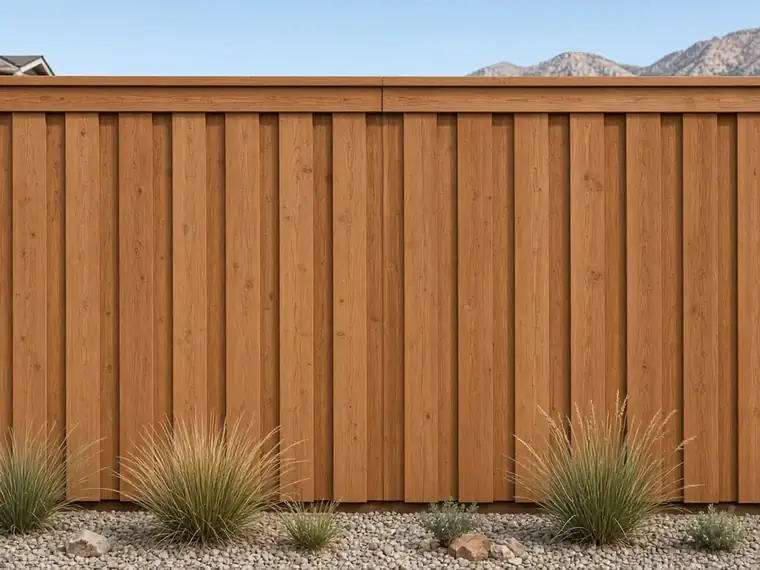
Cedar & wood privacy
Denver's default backyard fence ($14–$27/ft cedar; $9–$20/ft pine). Easy board-by-board repair; pair with steel or deep-set posts in clay.
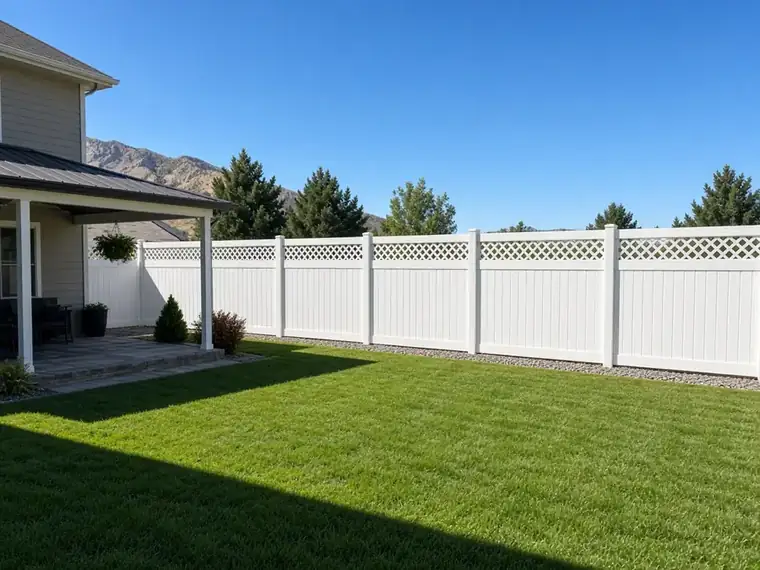
Vinyl privacy & picket
Low upkeep ($18–$38/ft), but cold snaps make panels brittle in hail—and barred in most Denver historic districts and Aurora front yards.
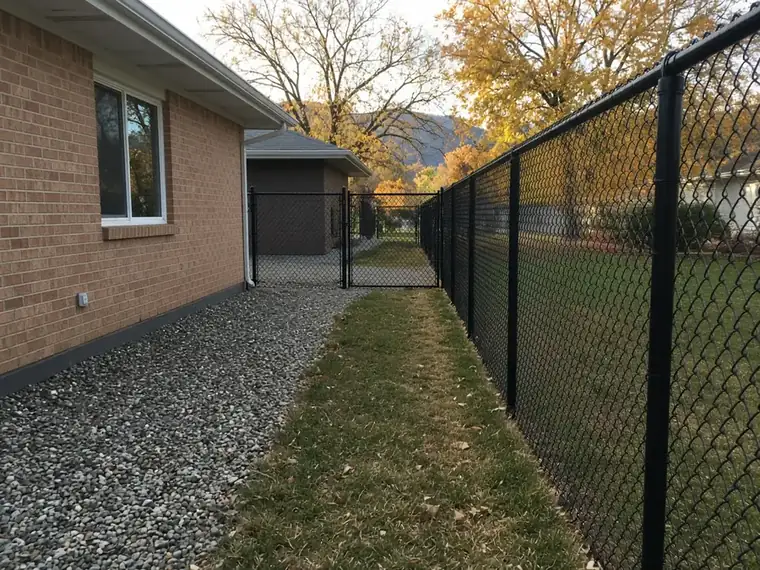
Chain link
Durable and budget-friendly ($6–$20/ft) for dogs and large side yards; banned in front yards in Greenwood Village, Aurora, and historic districts.
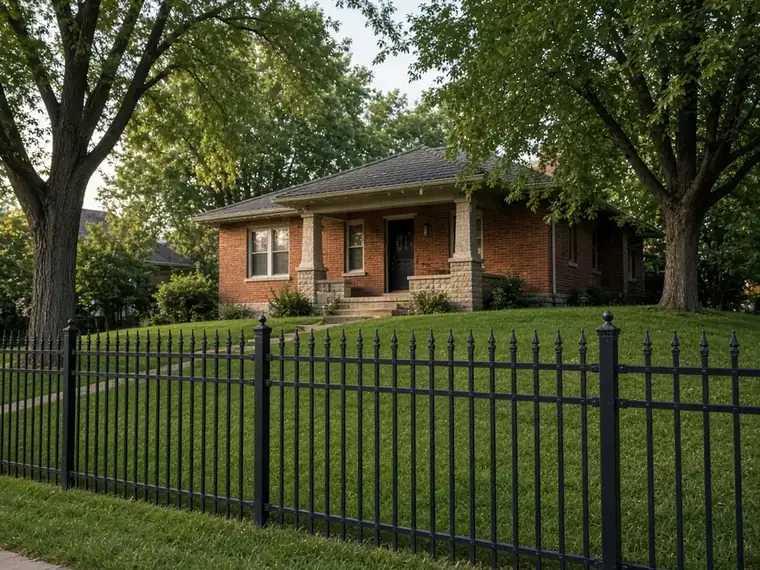
Ornamental iron & aluminum
Open sightlines ($25–$48/ft) that satisfy 50%–75% front-yard openness rules, historic district guidelines, and HOAs under HB24-1091.
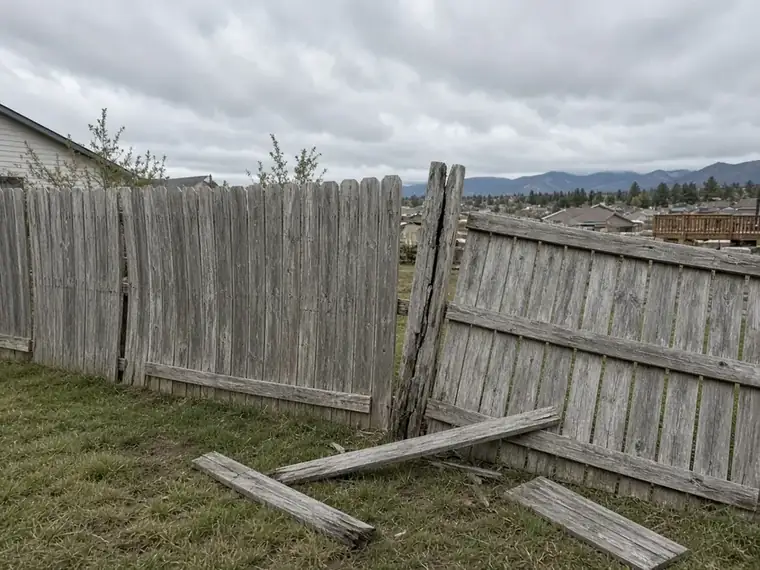
Fence repair & post reset
Targeted post resets, wind-blown panel swaps, and gate rebuilds—plus knowing when a repair triggers a city permit.
Denver fence permits, 36-inch frost depth, Class D licensing & Colorado 811
Before digging post holes anywhere in Denver, verify four state and city rules that local contractors are supposed to build into every scope:
- Denver 4-ft / 6-ft height & zoning permit threshold: Per Denver Community Planning and Development, residential fences top out at 4 feet forward of the primary street-facing façade and 6 feet behind it. Any fence over 4 feet—or retaining wall over 12 inches—needs a zoning permit via Denver e-permits (Building Log). Post-hole-dug fences only need a separate building permit above 8 feet. Barbed wire, corrugated metal, and salvage materials are prohibited for residential fences (Denver NIS).
- On-site Class D Fence Structures Supervisor license: Denver contractor licensing rules require an on-site supervisor holding a valid Class D Fence Structures Supervisor Certificate on permitted fence work inside the City and County of Denver (Denver CPD). Always ask a contractor for their Denver license number before signing.
- 2025 Denver Residential Code frost line (36 inches): Table R301.2 of the adopted 2025 Denver Residential Code (2025 Denver Building Codes) sets Denver's frost line depth at 36 inches below finished grade, ground snow load at 43 psf, design wind speeds at 115/125/140 mph (Special Wind Region), and weathering as Severe. Fence posts are not legally held to structural building-footing depth, which is why some low bids set posts at 18–24 inches; comparing quotes against the 36-inch benchmark protects you from spring frost heave in swelling clay.
- Colorado 811 & HB24-1091 HOA fire-hardened fencing law: State law requires contacting Colorado 811 at least two full business days before digging (811 advises waiting three full days; private sprinkler lines aren't marked and cost ~$100–$350 to locate privately). Under Colorado HB24-1091 (Colorado Division of Real Estate), HOAs generally cannot prohibit fire-hardened fencing materials, cannot raise costs by more than 10% over comparable fire-hardened options, and must act within 60 days (Colorado HOA fence guide).
Denver-metro permit & height rules by city
Crossing one avenue in the Denver metro completely changes height limits, front-yard openness rules, and permit triggers. Compare all ten jurisdictions below or open the interactive Metro Cheat Sheet & Calculator:
| City / Jurisdiction | Front yard max | Side / rear max | Permit trigger |
|---|---|---|---|
| Denver (Standard Residential) | 4 ft max (in front of primary street-facing facade) | 6 ft max (over-height up to 8 ft needs DZC 10.5.5 review) | Zoning permit >4 ft ($10-$35+ valuation; $100 over-height); building permit >8 ft post-hole |
| Denver Historic Districts & Parkways | 4 ft max and >50% open | 6 ft max (solid OK; 6-8 ft rear needs 3 neighbor height photos) | Permit + Landmark Certificate of Appropriateness required at ANY height (parkways also need Parks review) |
| Aurora | 42 in max, <=50% opaque, solid base <=18 in; 18 in from sidewalk | 6 ft max (8 ft along arterial/collector streets) | No permit for standard wood/privacy/picket/rail <=7 ft or chain link; standards still apply |
| Lakewood | 4 ft max and >=50% open (non-primary front up to 6 ft in R-2) | 6 ft max solid privacy | Fence permit via eTRAKiT when >8 linear ft is built, replaced or repaired; retaining walls >3 ft need building permit |
| Centennial | 4 ft max, <=50% opaque, >=6 in from sidewalk (5 ft from street if no walk) | 8 ft max per LDC 12-3-602 table (completion inspection required >6 ft) | Permit for new fences and replacements changing height/location/material ($20 min + use tax; ~5 business days) |
| Arvada | 3 ft max (4 ft if >=50% transparent) in most residential zones | 6 ft max (>6 ft requires building plan review, wind rating & engineer letter) | Permit required for EVERY fence regardless of height (repairs <=8 linear ft exempt); contractor applies |
| Littleton | 48 in max, >=50% open interior / >=75% open corner lot | 6 ft max (>6 ft needs BOA variance; >7 ft needs stamped drawings) | Building permit required for ALL fences via eTRAKiT (site plan must show post depth); >=2 ft from sidewalks/ROW |
| Highlands Ranch | Set by HRCA guidelines (wing fences & front setbacks require ARC approval) | 5 or 6 ft solid rough-sawn cedar with top cap (per HRCA RIG Figures 1-2) | HRCA ARC approval ($0 fee) for every new/replacement fence; Douglas County building permit >7 ft (SR zoning >6 ft) |
| Greenwood Village | None forward of house midpoint in most zones (R-2.5: 4 ft, <=25% opaque, 6 ft setback) | 6 ft max combined height including any berm or retaining wall (posts +9 in) | Permit required for every fence through Community Development; PUD/SDP overrides city defaults |
| Broomfield | 2.5 ft max ornamental in E-1/E-2/R-1/R-3/R-5 (RR: 42 in open); corner sight triangle <=3.5 ft or >=90% open | 6 ft max typical (up to 8 ft adjacent to state highways) | Permit required >30 in, for replacements/relocations, or repairs >10 ft (1-2 business days; no inspection) |
Two critical local caveats verified Nov 25, 2026: (1) Centennial lists an 8-ft side/rear residential maximum on both its official Apply for a Fence Permit page and Municode LDC §12-3-602 (with a mandatory completion inspection above 6 ft), even though an older city brochure prints 6 ft—confirm with Centennial Planning (303-754-3308) and your HOA. (2) Highlands Ranch requires free HRCA ARC approval (5- or 6-ft rough-sawn cedar with top cap), while Douglas County Building Amendments (IBC §105.2(2)) exempts non-electrified fences ≤7 ft and SR Zoning §715 requires permits over 6 ft—confirm PD parcels with Douglas County Building Division (303-660-7497).
How to read a fence quote in Denver line by line
When two quotes for the same 150-foot backyard fence come back $1,800 apart, the cheaper estimate is almost always omitting depth, concrete, hardware, or compliance items. Put these four steps in order before you sign:
- Price & verify rules firstUse the 2026 Fence Cost Calculator to benchmark fair Denver per-foot pricing and print your city's permit and HOA rules.
- Get HOA & survey clarityCheck corner-lot sight triangles, property pins, and whether your HOA mandates rough-sawn cedar, top caps, or stain colors.
- Require identical written specsGet a written quote that names the exact post species/gauge, hole depth (24 vs. 30–36 in), concrete per hole, gate frame type, tear-out, Class D/city permit, and 811 locate.
- Request a written quoteReady for a bid? Use the quote request form or contact page to send your specs and we will follow up.
Frequently asked questions
How much does a fence cost in Denver in 2026?
Angi's 2026 Denver data puts typical residential installations at $2,780 on average ($455 to $10,500 overall, or $12 to $60 per linear foot). A 150-foot privacy fence averages $2,860 for wood, $3,920 for vinyl, and $4,450 for composite, while walk gates add $150-$450 and old-fence removal adds $3-$5/ft. Run your exact measurements in our Denver Fence Cost Calculator.
Do I need a permit to build or replace a fence in Denver?
Yes for any fence over 4 feet tall in standard Denver residential zones (a zoning permit via e-permits Building Log), and for walls over 12 inches. Post-hole-dug fences only need a building permit above 8 feet. In Denver historic districts, individual landmarks, and along designated parkways, EVERY fence needs a permit regardless of height.
How deep should fence posts be in Denver's clay soil?
The adopted 2025 Denver Residential Code (Table R301.2) sets Denver's frost line depth at 36 inches below finished grade. Standard fence posts are not legally held to structural footing depth, so ask contractors to specify exact post depth (commonly 30 to 36 inches for 6-foot privacy runs in swelling bentonite clay) in writing.
What license does a fence contractor need inside Denver?
Permitted fence work in the City and County of Denver requires an on-site supervisor holding a Denver Class D Fence Structures Supervisor Certificate, issued through Denver Community Planning and Development.
How tall can a residential fence be in Denver?
Up to 4 feet forward of the primary street-facing facade and 6 feet behind it in residential and commercial zones. Over-height requests up to +2 feet require staff review under Denver Zoning Code Section 10.5.5 ($100 fee) and often 50% openness criteria.
Are Centennial fences capped at 6 feet or 8 feet?
Centennial's official Apply for a Fence Permit page and Municode Land Development Code Section 12-3-602 allow up to 8 feet in interior side, street side, and rear yards (with a mandatory completion inspection above 6 feet), though an older city brochure states 6 feet. Confirm with Centennial Planning (303-754-3308) and your HOA.
Do I need a permit in Highlands Ranch?
Yes from the Highlands Ranch Community Association (HRCA) Architectural Review Committee ($0 fee, 5- or 6-ft rough-sawn cedar with top cap). Douglas County Building Code (IBC §105.2(2)) exempts non-electrified fences up to 7 ft, while SR Zoning (§715) requires permits over 6 ft; confirm PD lots with Douglas County Building Division (303-660-7497).
How close to the sidewalk or property line can I build in Denver?
Denver requires every fence to sit entirely on your property—never in the street, alley, or tree-lawn right-of-way—and at least 6 inches back from the public sidewalk. Littleton requires at least 2 feet from sidewalks/ROW, and Aurora requires 18 inches in front and 4 feet on corner/rear sidewalks.
What is the best fence material for Colorado hail and wind?
Cedar privacy with steel or deep-set posts handles hail best for easy board-by-board repairs, while ornamental iron/aluminum reduces wind load and resists UV and fire (protected from HOA bans under Colorado HB24-1091). Vinyl avoids staining but becomes brittle in winter cold snaps and can crack in severe hail.
Can an HOA ban a metal or fire-hardened fence in Colorado?
Under Colorado HB24-1091, HOAs generally cannot prohibit fire-hardened fencing materials, cannot impose standards adding more than 10% to the cost compared with other fire-hardened options, and must rule on applications within 60 days.