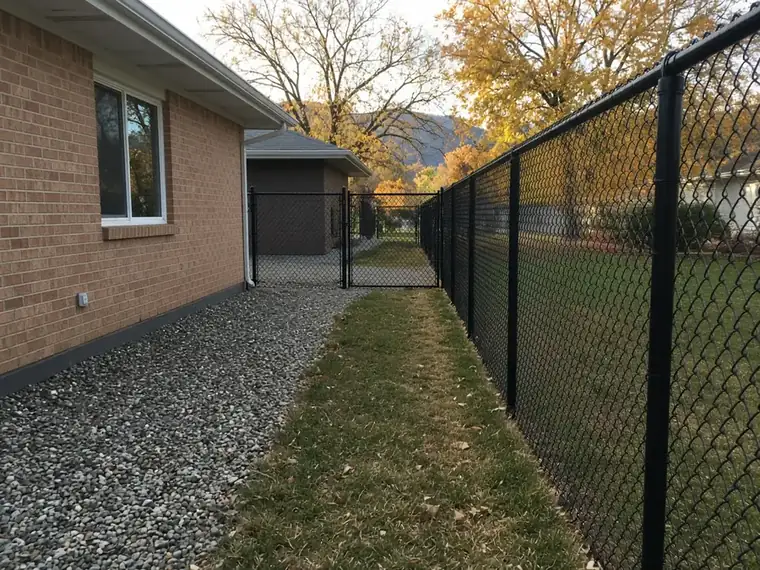
Where chain link fits, and where it doesn't
- Allowed: most rear and side yards in Denver and the suburbs, within each city's height limits.
- Not allowed in most Denver historic districts and individual landmarks, along with vinyl and PVC (Denver Landmark Preservation).
- Aurora front yards: Aurora's fence brochure lists chain link as a prohibited material in its front-yard section (Aurora brochure). Aurora's building code amendment exempts all chain link fences from building permits (Aurora City Code 22-135), but zoning location and height standards still apply.
- Arvada front setbacks in most residential zones allow 3 feet, or 4 feet if the fence is at least 50% transparent, which open chain link usually is (Arvada).
- Denver nuisance rules: Denver Neighborhood Inspection Services lists barbed wire, corrugated metal and salvage materials as not approved for residential fences (Denver NIS).
Options to ask about
- Galvanized vs. vinyl-coated: black or green coated fabric blends into landscaping and is gentler on hands and paws; galvanized is the utilitarian standard.
- Wire gauge and mesh size: heavier gauge resists dents from dogs and kids; smaller mesh is harder to climb.
- Top rail vs. tension wire: top rails stiffen the fence against wind and leaning.
- Privacy slats: they add privacy but also wind load, so check post spacing and footing if slats are planned.
- Dig guard: a bottom tension wire or buried mesh for dogs that dig.
Soil and posts
Chain link posts are thin compared with wood posts, so a heaved footing shows quickly as a leaning line post or a gate that won't latch. Expansive clays common in the metro swell when wet (CGS). Drainage at the footing and keeping sprinkler heads aimed away from terminal and gate posts make a real difference.
Height and permits in Denver
Denver's limits are 4 feet in front of the primary façade and 6 feet behind, and fences over 4 feet need a zoning permit (Denver CPD). A 4-foot chain link dog run behind the house usually needs no Denver permit unless the property is in a historic district, a landmark, or on a designated parkway.
What drives the price
Length, height, coating, gauge, the number of terminal posts (every corner, end and gate adds one), gates, slope, rock or roots, and old-fence removal. Ask for the count of terminal posts and gates on the quote.
Frequently asked questions
Do I need a permit for a chain link fence in Denver?
Only if it's over 4 feet tall, or if the property is in a historic district, a landmark, or on a designated parkway, where any fence needs a permit. A 4-foot chain link fence elsewhere in Denver doesn't need one.
Is chain link allowed in Denver historic districts?
Generally no. Denver Landmark Preservation says vinyl, PVC and chain-link fences are not allowed in most historic districts and on individual landmarks. Open wood or metal designs are the usual alternatives; see historic district rules.
Can I add privacy slats to chain link?
Usually, within the same height limits. Slats turn an open fence into a solid one, which adds wind load and may matter for front-yard openness rules. Confirm posts and footings are sized for it.
Is barbed wire allowed on a residential fence in Denver?
No. Denver Neighborhood Inspection Services lists barbed wire, corrugated metal and salvage materials as not approved for residential fences.
What's the best chain link for dogs?
A heavier gauge with a top rail resists pushing and leaning, a smaller mesh is harder to climb, and a bottom tension wire or buried guard helps with diggers. Coated fabric is smoother on paws.
Does Aurora require a permit for chain link?
Aurora's building code amendment exempts all chain link fences from building permits. Its zoning standards still apply, and its front-yard brochure lists chain link as prohibited in front yards.
How long does chain link last in Denver?
Life depends on coating, gauge and how posts were set. We don't cite a number we can't source; ask the contractor for the fabric and post specs and the manufacturer's warranty.